

Back

Emergency Ultrasound for Rural and Remote Medicine Course

$3,820.00 | 2 Day Course | Melbourne

Learn the fundamentals of point of care ultrasound essential for the rural generalist. Assess your patients at the bedside and increase your diagnostic capabilities for improved patient outcomes.

Select your date and enter your details to start your journey with us – we can’t wait to meet you.

Is your preferred course date full?  Join our Waitlist Here

Three day course commencing on the:
Clear
-
+
shop

Zedu’s 3-Day Emergency Ultrasound for Rural and Remote Medicine course is designed to equip healthcare professionals with the essential ultrasound skills needed for fast, accurate decision-making in resource-limited settings. This intensive, hands-on program combines focused theoretical instruction with extensive practical scanning on real patients, covering key applications such as eFAST, AAA, early pregnancy assessment, abdominal pain assessment, deep vein thrombosis and ultrasound-guided procedures. Participants will learn a structured, systematic approach to scanning, develop confidence in point-of-care ultrasound (POCUS) use, and refine their image interpretation skills under expert guidance. Tailored for clinicians working in rural and remote environments, this course ensures attendees leave with practical, immediately applicable skills to enhance patient care and clinical outcomes.

Learn the fundamentals of point of care ultrasound essential for the rural generalist through this emergency ultrasound training program. Assess your patients at the bedside and increase your diagnostic capabilities for improved patient outcomes.

Objectives

On completion of this three-day clinically focused rural medicine ultrasound course will:

  • Use ultrasound system controls to optimise imaging for accurate diagnosis
  • Develop proficiency in probe manipulation to efficiently acquire diagnostic images
  • Describe the limitations and clinical integration of the following ultrasound examinations:
  • Use a systematic approach to conduct ultrasound assessment of
    • trauma
    • abdominal aortic aneurysms
    • right upper quadrant pain
    • pain and bleeding in first trimester
    • intrauterine pregnancy or ectopic implantation
    • deep vein thrombosis
  • Demonstrate ultrasound guided needle placement in-plane and out of plane for vascular access and procedural applications using ultrasound simulators

CME recognition 

Zedu ultrasound workshops are approved by ACEM for CPD in 202425 CPD hours

Zedu ultrasound training courses are recognised for CPD by The Australasian College of ParamedicineRecognised for CPD

Zedu ACRRM CPD Approved Activity 2026-28 TrienniumCPD Accredited Activity

Zedu ultrasound training courses are recognised for CPD by ANZCA

CPD Short Format Learning


Zedu ultrasound training courses are recognised by ASUM for CCPUAAA, eFAST, Vascular Access, Basic Early Pregnancy, Biliary

Zedu RACGP CPD Approved Activity 2026-28 Triennium

CPD Accredited Activity


Features

  • Modules (total) 8
  • Skill level Novice
  • Duration (days) 3
  • Lectures (hours) 4.5
  • Scan time (hours) 15.25
  • Clinician No

Who should attend?

Rural practitioners Emergency medicine physicians and trainees GP's working in rural and remote settings Paramedics

Key benefits for attendees

  1. Hands-on Practical Training: Participants will gain extensive, real-world experience through supervised scanning on diverse patient models, building confidence in using ultrasound in emergency settings.
  2. Point-of-Care Ultrasound (POCUS) Skills: Attendees will learn how to perform critical ultrasound applications such as eFAST, AAA, cardiac, abdominal, and vascular ultrasounds, allowing them to make rapid, informed decisions in emergency situations.
  3. Systematic, Structured Approach: The course emphasizes a structured, systematic approach to ultrasound scanning, ensuring participants are equipped with reliable techniques for accurate diagnosis in high-pressure environments.
  4. Enhanced Diagnostic Capabilities: Attendees will improve their ability to assess and diagnose a range of conditions on-site, reducing the need for patient transfer and enabling more effective management of complex cases in rural and remote settings.
  5. Immediate, Real-Time Application: The skills learned can be immediately applied to practice, helping physicians enhance patient care and clinical outcomes by using portable ultrasound devices in their day-to-day medical work.
  6. Tailored for Rural and Remote Practice: The course is specifically designed to meet the unique challenges of healthcare professionals working in rural and remote environments, providing tools and techniques that are practical and relevant to their practice needs.
  7. Expert Guidance and Support: Attendees will benefit from direct instruction and feedback from experienced ultrasound educators, ensuring a high-quality learning experience that emphasizes patient safety and clinical accuracy.

Why ultrasound matters

For rural generalists or emergency medicine physicians working in rural and remote settings, bedside ultrasound is a game-changer in providing immediate, accurate diagnostic information that is critical for making informed decisions. In environments where access to advanced imaging technologies like CT or MRI is limited or delayed, ultrasound allows healthcare professionals to assess a range of conditions quickly, from trauma and internal bleeding to cardiac and respiratory issues. This ability to perform point-of-care ultrasound (POCUS) enables physicians to stabilise patients, prioritise treatments, and make decisions on-site, potentially saving lives and improving outcomes, especially when time is of the essence. Ultrasound also plays a vital role in overcoming the challenges of distance and isolation in rural healthcare. In these settings, patients may have to travel long distances to receive specialized care, so the ability to perform real-time diagnostics significantly reduces the need for transfer to larger hospitals. By enhancing the physician's diagnostic capabilities, ultrasound allows rural healthcare professionals to manage complex cases more effectively and provide higher levels of care in situations where resources and support are scarce. Portable ultrasound devices have further revolutionised care in rural and remote settings by providing physicians with a compact, lightweight, and user-friendly tool that can be easily transported to various clinical environments, including emergency rooms, field settings, or patients' homes. Their portability, ease of use, and non-invasive nature make portable ultrasound devices ideal for addressing the varied and unpredictable needs of rural and remote medical practice, ensuring that healthcare professionals can deliver accurate, real-time diagnostics wherever needed. In rural general practice, having access to an ultrasound machine allows physicians to perform ultrasound imaging on-site, enabling faster diagnosis and treatment, and significantly improving patient outcomes in areas with limited access to specialized diagnostic services.

Features

  • Modules (total) 8
  • Skill level Novice
  • Duration (days) 3
  • Lectures (hours) 4.5
  • Scan time (hours) 15.25
  • Clinician No

Zedu’s 3-Day Emergency Ultrasound for Rural and Remote Medicine course is designed to equip healthcare professionals with the essential ultrasound skills needed for fast, accurate decision-making in resource-limited settings. This intensive, hands-on program combines focused theoretical instruction with extensive practical scanning on real patients, covering key applications such as eFAST, AAA, early pregnancy assessment, abdominal pain assessment, deep vein thrombosis and ultrasound-guided procedures. Participants will learn a structured, systematic approach to scanning, develop confidence in point-of-care ultrasound (POCUS) use, and refine their image interpretation skills under expert guidance. Tailored for clinicians working in rural and remote environments, this course ensures attendees leave with practical, immediately applicable skills to enhance patient care and clinical outcomes.

Learn the fundamentals of point of care ultrasound essential for the rural generalist through this emergency ultrasound training program. Assess your patients at the bedside and increase your diagnostic capabilities for improved patient outcomes.

Objectives

On completion of this three-day clinically focused rural medicine ultrasound course will:

  • Use ultrasound system controls to optimise imaging for accurate diagnosis
  • Develop proficiency in probe manipulation to efficiently acquire diagnostic images
  • Describe the limitations and clinical integration of the following ultrasound examinations:
  • Use a systematic approach to conduct ultrasound assessment of
    • trauma
    • abdominal aortic aneurysms
    • right upper quadrant pain
    • pain and bleeding in first trimester
    • intrauterine pregnancy or ectopic implantation
    • deep vein thrombosis
  • Demonstrate ultrasound guided needle placement in-plane and out of plane for vascular access and procedural applications using ultrasound simulators

CME recognition 

Zedu ultrasound workshops are approved by ACEM for CPD in 202425 CPD hours

Zedu ultrasound training courses are recognised for CPD by The Australasian College of ParamedicineRecognised for CPD

Zedu ACRRM CPD Approved Activity 2026-28 TrienniumCPD Accredited Activity

Zedu ultrasound training courses are recognised for CPD by ANZCA

CPD Short Format Learning


Zedu ultrasound training courses are recognised by ASUM for CCPUAAA, eFAST, Vascular Access, Basic Early Pregnancy, Biliary

Zedu RACGP CPD Approved Activity 2026-28 Triennium

CPD Accredited Activity


Features

  • Modules (total) 8
  • Skill level Novice
  • Duration (days) 3
  • Lectures (hours) 4.5
  • Scan time (hours) 15.25
  • Clinician No

Who should attend?

Rural practitioners Emergency medicine physicians and trainees GP's working in rural and remote settings Paramedics

Key benefits for attendees

  1. Hands-on Practical Training: Participants will gain extensive, real-world experience through supervised scanning on diverse patient models, building confidence in using ultrasound in emergency settings.
  2. Point-of-Care Ultrasound (POCUS) Skills: Attendees will learn how to perform critical ultrasound applications such as eFAST, AAA, cardiac, abdominal, and vascular ultrasounds, allowing them to make rapid, informed decisions in emergency situations.
  3. Systematic, Structured Approach: The course emphasizes a structured, systematic approach to ultrasound scanning, ensuring participants are equipped with reliable techniques for accurate diagnosis in high-pressure environments.
  4. Enhanced Diagnostic Capabilities: Attendees will improve their ability to assess and diagnose a range of conditions on-site, reducing the need for patient transfer and enabling more effective management of complex cases in rural and remote settings.
  5. Immediate, Real-Time Application: The skills learned can be immediately applied to practice, helping physicians enhance patient care and clinical outcomes by using portable ultrasound devices in their day-to-day medical work.
  6. Tailored for Rural and Remote Practice: The course is specifically designed to meet the unique challenges of healthcare professionals working in rural and remote environments, providing tools and techniques that are practical and relevant to their practice needs.
  7. Expert Guidance and Support: Attendees will benefit from direct instruction and feedback from experienced ultrasound educators, ensuring a high-quality learning experience that emphasizes patient safety and clinical accuracy.

Why ultrasound matters

For rural generalists or emergency medicine physicians working in rural and remote settings, bedside ultrasound is a game-changer in providing immediate, accurate diagnostic information that is critical for making informed decisions. In environments where access to advanced imaging technologies like CT or MRI is limited or delayed, ultrasound allows healthcare professionals to assess a range of conditions quickly, from trauma and internal bleeding to cardiac and respiratory issues. This ability to perform point-of-care ultrasound (POCUS) enables physicians to stabilise patients, prioritise treatments, and make decisions on-site, potentially saving lives and improving outcomes, especially when time is of the essence. Ultrasound also plays a vital role in overcoming the challenges of distance and isolation in rural healthcare. In these settings, patients may have to travel long distances to receive specialized care, so the ability to perform real-time diagnostics significantly reduces the need for transfer to larger hospitals. By enhancing the physician's diagnostic capabilities, ultrasound allows rural healthcare professionals to manage complex cases more effectively and provide higher levels of care in situations where resources and support are scarce. Portable ultrasound devices have further revolutionised care in rural and remote settings by providing physicians with a compact, lightweight, and user-friendly tool that can be easily transported to various clinical environments, including emergency rooms, field settings, or patients' homes. Their portability, ease of use, and non-invasive nature make portable ultrasound devices ideal for addressing the varied and unpredictable needs of rural and remote medical practice, ensuring that healthcare professionals can deliver accurate, real-time diagnostics wherever needed. In rural general practice, having access to an ultrasound machine allows physicians to perform ultrasound imaging on-site, enabling faster diagnosis and treatment, and significantly improving patient outcomes in areas with limited access to specialized diagnostic services.

Features

  • Modules (total) 8
  • Skill level Novice
  • Duration (days) 3
  • Lectures (hours) 4.5
  • Scan time (hours) 15.25
  • Clinician No

Class times

Day 1: 0830 – 1700
Day 2: 0900 – 1700
Day 3: 0900 – 1700


Modules

Image optimisation – interactive practical session

  • Explore system controls
  • Understand the impact of optimisation on the image
  • Presets, frequency, depth, focus and gain
  • How to label the image
  • How to store and review images


Probe Manipulation

  • Probe care
  • Probe moves
  • Probe grip
  • Probe and screen orientation
  • 3D awareness of the anatomical position of the organs


EFAST

  • eFAST protocol
  • Scan technique
  • the “views”
  • recognise normal and abnormal imaging
  • qualitative estimates of free fluid volume
  • Techniques to improve imaging
  • limitations and pitfalls
  • clinical utility and application

Scanning, scanning and more scanning of real people


AAA

  • scanning technique
  • sonographic anatomy
  • how to measure a AAA
  • recognise normal and abnormal imaging
  • Techniques to improve imaging
  • Diagnostic criteria
  • limitations and pitfalls
  • clinical utility and application

Scanning, scanning and more scanning of real people


Procedural Guidance

  • Principles of needle guidance
  • Terminology – In-plane, out-of-plane, LAX and SAX
  • Techniques to improve imaging
  • limitations and pitfalls
  • sonographic anatomy of the region
  • patient positioning
  • equipment preparation
  • ergonomics of safe procedures
  • Clinical utility and applications

Scanning, scanning and more scanning of real people
Identify the anatomy and needle approach on real people
Stick needles into a wide variety ultrasound phantoms for procedural practice (we want our patients to come back :))


Biliary

  • scan technique
  • patient positioning
  • recognise normal and abnormal imaging
  • gallstones
  • acute cholecystitis
  • choledocholithiasis
  • gallbladder wall thickness
  • bile duct measurement
  • techniques to improve visualisation
  • limitations and pitfalls
  • clinical utility and application

Scanning, scanning and more scanning of real people


DVT

  • anatomy of the vessels
  • patient positioning
  • hip to knee scan technique
  • compression technique
  • utility of Doppler
  • recognise normal and abnormal imaging
  • diagnostic criteria
  • techniques to improve visualisation
  • pearls and pitfalls
  • clinical utility and application

Scanning, scanning and more scanning of real people


Early Pregnancy Assessment

  • scan technique and approach to the early pregnancy evaluation
  • recognise normal and abnormal imaging
  • sonographic signs of non-viable pregnancy
  • evaluation of ectopic pregnancy
  • evaluation of pain and bleeding
  • sonographic signs of gestational sac mimics
  • sonographic signs of abnormal implantation
  • diagnostic criteria for pregnancy failure
  • techniques to improve visualisation
  • limitations and pitfalls
  • clinical utility and application

Scanning, scanning and more scanning of real women in their 1 st trimester of pregnancy


CME details

ACEM | Approved for 25 ACEM CPD hours

ACP | This course is recognised by the Australasian College of Paramedicine for CPD hours

ACRRM | This CPD activity has been approved for the following hours and types: Educational activities hours: 7.5 | Reviewing performance hours: 16.0 | This activity is eligible for RPGP – Emergency Medicine, Obstetrics, Anaesthetics, Surgery | MOPS hours: 16.0 MOPS (Emergency Medicine) hours; 16.0 MOPS (Radiology) hours | Curriculum domains: Respond to medical emergencies, Provide safe medical care while working in geographic and professional isolation| Curriculum learning areas: O&G, IMAG, PROC.

ANZCA | Participants in the ANZCA CPD program can claim attendance under the Knowledge and Skills category ‘Short format learning’

ASUM | CCPU Accredited Units: AAA, eFAST, Vascular Access, Basic Early Pregnancy, DVT, Biliary

RACGP | CPD Accredited Activity 1451610 | This activity has been approved for the following hours and types: Educational activities hours: 13.0 | Reviewing performance hours: 15.5 | This activity has been approved for Anaesthetic rural procedural training grant; Emergency Medicine rural procedural training grant; Obstetric rural procedural training grant; Surgery rural procedural training grant

Approved by ACRRM and RACGP for the Rural Procedural Grants Program – GPs can receive $2000 per day for a maximum of 10 days of training per financial year, GPs providing hospital based emergency services can receive up to three days of eligible training per financial year.

A great training course is only the beginning of your ultrasound learning journey

To help you master ultrasound and lasting change from training we engage you from the outset

Before your course:
There are pre course activities & access to preparatory learning resources to maximise your in-class experience

During your course:

  • Short, sharp information sessions to provide foundational knowledge and clinical context
  • Lots of hands-on practical sessions with real people to scan (including for TV and obstetric scans). Our standardised patients models vary in age, size, shape and mobility to make the transition to clinical reality easier.
  • Case studies led by practising clinicians to demonstrate clinical utility
  • A variety of different machines to learn on
  • At the conclusion of your course we’ll lead you to create a skills development action plan, creating a pathway that you can use to apply your newly acquired skills, promote clinical integration and ultimately reach your final objective – ultrasound competency

After your Emergency Ultrasound Training:
The learning continues

  • We encourage self-directed learning in the workplace with structured active learning plans
  • A great selection of free access online medical ultrasound (FoamUS) learning resources
  • You can subscribe to the weekly wrap – a weekly curation of ultrasound related hot tips and journal articles.

More Ways Zedu Can support your ultrasound skills development:

  • Image review – details here
  • Follow-up coaching with our Zedu coaches

Venue & Logistics

Learn in comfort and convenience!

Your Ultrasound Guided Regional Anaesthesia Course takes place at our Melbourne Training Headquarters – Australia's home of ultrasound training: Level 4, Unit 37 / 240 Plenty Road, Bundoora, Melbourne VIC 3083

Easy to Get Here:

  • From the Airport: Just 20 minutes from Melbourne International Airport—perfect for interstate and overseas participants.
  • Parking: Free and convenient in the Coles carpark directly opposite the building.
  • Public Transport: Quick access via Tram 86 or buses that stop right at the door.

Nearby Comforts:

  • Accommodation: Quest Hotel Bundoora is only 300 meters away.
  • Shopping & Dining: UniHill DFO and nearby Uni Hill shops, including Coles, are close by for coffee, meals, or essentials.

Our venue combines professional, fully equipped learning spaces with all the convenience you need, so you can focus entirely on developing your ultrasound skills - and enjoy a smooth, stress-free course experience.

Check out our brand new training facilities, purpose built to enhance not only educational outcomes, but comfort and enjoyment!

FAQs

From one to twelve, and everything in between. As a rule we exceed the minimum requirements, ensuring that there is an industry leading ratio of 1 sonographer educator or physician to every 4 course participants. This is important as it ensures that you get more hands-on time all the tim

The courses are run at the Zedu Learning HQ:

8-10 Flintoff Street, Greensborough VIC 3088, Australia

When you register you’ll get information on our location and transport options delivered to your email inbox too.

From one to twelve, and everything in between. As a rule we exceed the minimum requirements, ensuring that there is an industry leading ratio of 1 sonographer educator or physician to every 4 course participants. This is important as it ensures that you get more hands-on time all the tim

Yes we do – we love to tour and share ultrasound around the world. If you’d like to discuss what options you have to get us to deliver training at your place please get in touch.

Zedu courses are designed for your specialty. With quality education always at our front of mind, you’ll be learning with a group of your peers from start to finish. This ensures you are getting a no compromise sequential and structured education experience, all the while having the security and safety of learning with your peers. Your learning experience is not compromised by people joining at different stages and at different levels – you’ll be on board with the same team from beginning to end.

That’s precisely what we do. Our courses are designed for you to get your hands on a probe so you can take home practical skills. All courses have a ratio of at least 2/3 practical, 1/3 didactic – you won’t be disappointed.

Would you only go to part of a movie? Our courses are designed to be attended as a whole, structured in a sequential way to make sure you develop and extend your ultrasound repertoire. Besides – if gaining your credentials is an important part of your motivation to come along, the bodies that accredit our courses wouldn’t look too kindly on you skipping class.

No – but there is a very affordable options only a three-minute walk from our front door. You can find more information here…

Absolutely not. Our courses are designed for anaesthetists at any stage of their career, with any level of ultrasound experience. Our experienced sonographer educators will adapt their teaching to meet you at your level – no stress.

Yes – we love teaching one-on-one as it delivers optimal results over a short time-period. Get in touch.

In short – it depends.

If you’re attending to meet the requirements of your own local health authority – and attending a course is all that’s required – then the answer may be yes.

If you’re attending to meet the requirements of your own local health authority and they require validation of your skills via an external/third party credentialing provider – such as the POCUS Certification Academy or ASUM – then no.

If it’s all too confusing and causing you a headache we can help you navigate the credentialing quagmire – please get in touch.

Yes there is – but it’s not too onerous. We recommend you at least revise your physics by watching the short videos before you arrive – the other material you can review as you go, or afterwards.

Yes indeed. Make sure you bring your chargers and accessories too.

Use the login details you created at registration.

The vast majority of Zedu ultrasound courses carry accreditation or are recognised by one or more bodies, including:

  • The Australasian College for Emergency Medicine (ASUM)
  • The Australian College of Midwives (ACM)
  • The Australian College of Rural & Remote Medicine (ACRRM)
  • The Australian and New Zealand College of Anaesthetists (ANZCA)
  • The Australasian Society of Ultrasound in Medicine (ASUM)
  • The College of Intensive Care medicine of Australia and New Zealand (CICM)
  • The Point-of-Care Ultrasound Certification Academy
  • The Royal Australian College of General Practitioners (RACGP)
  • The Royal Australasian College of Physicians (RACP)
  • The Royal Australasian College of Surgeons (RACS)
  • The Royal Australian and New Zealand College of Obstetricians and Gynaecologists (RANZCOG)
  • The Thoracic Society of Australia and New Zealand (TSANZ)

No – we are famous for our catering – rest assured you will be well fed and watered.

Our latest Ultrasound Training news

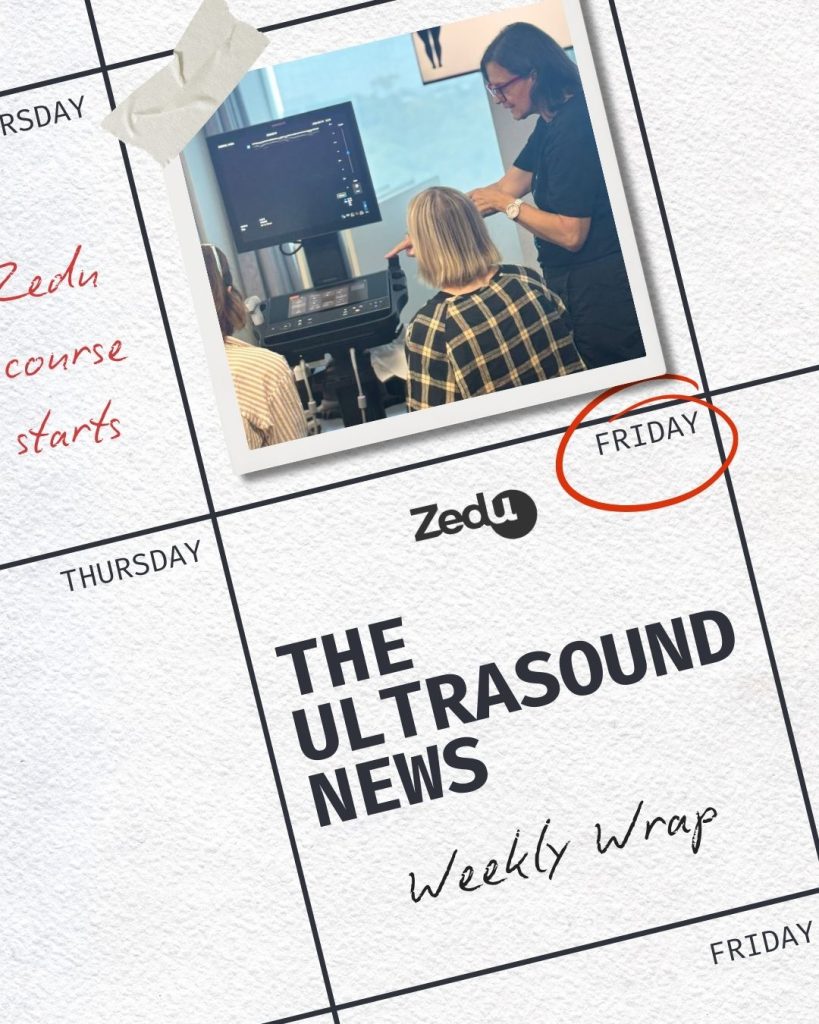
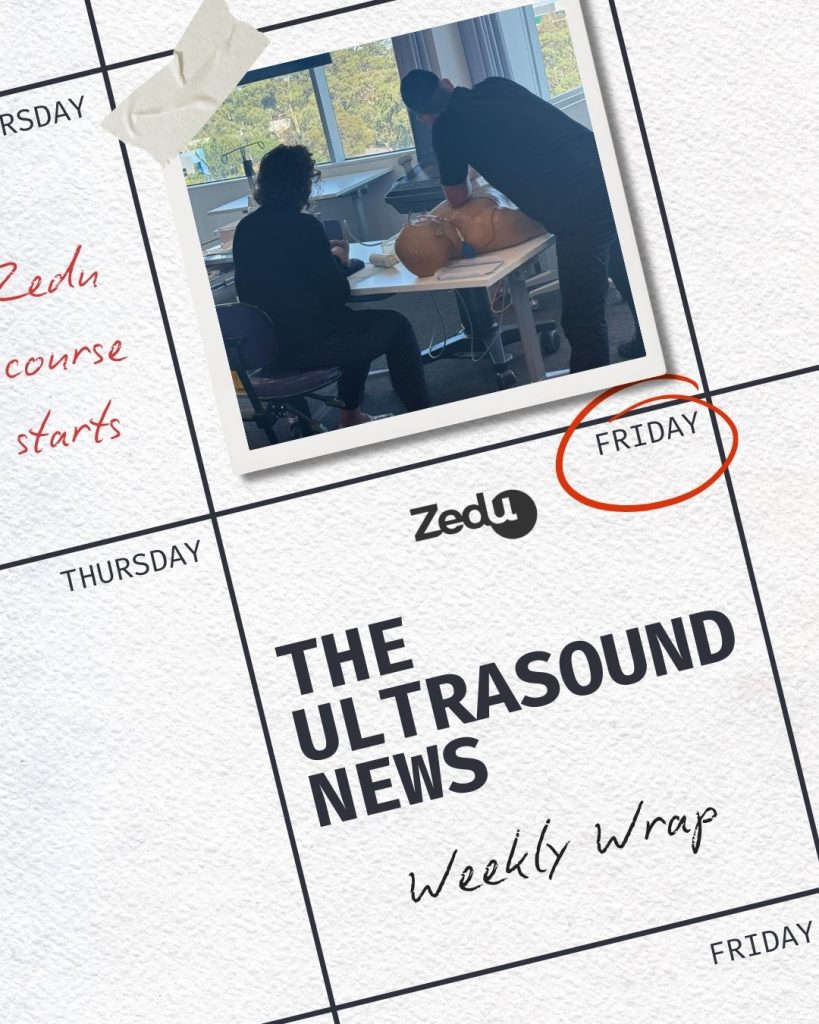
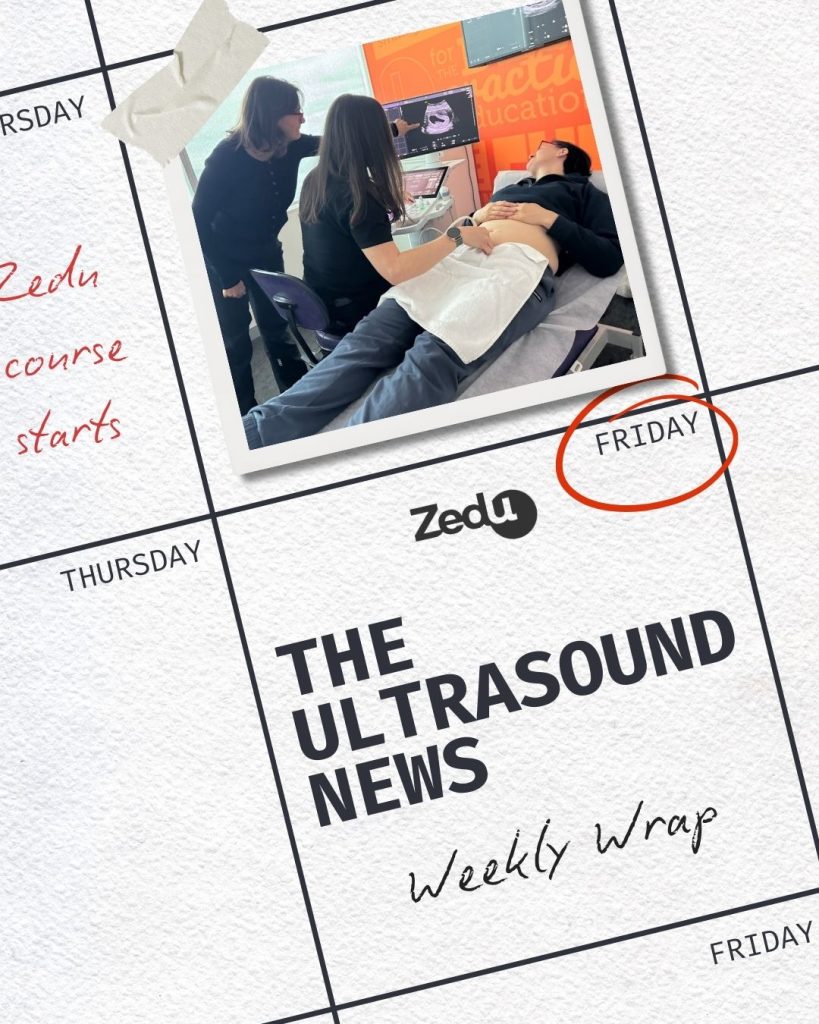
Zedu Weekly Wrap – 27 February 2026

Making this a quick summary… as there are storms rolling in and the electricity is under attack! Highlights from this week in the world of ultrasound: Diaphragmatic Ultrasonography as a Predictor of Extubation Success in Children: Systematic Review and Meta-Analysis …

Zedu Weekly Wrap – 20 February 2026

It has been another busy, energising week at Zedu… scanners on, sleeves rolled up, and plenty of lightbulb moments along the way. Across multiple disciplines we’ve seen clinicians lean into deliberate practice – our mantra – refining probe handling, image …

Zedu Weekly Wrap – 13 February 2026

Big week in ultrasound across anaesthesia, obstetrics, cardiology and primary care… from robotic 3D echo fusion to real-world GP implementation data and evolving management of ectopic pregnancy, the research out there continues to reinforce one thing: ultrasound is no longer …

Conveniently Located In Victoria, Australia

Chat to one of our team for expert advice or to organise a a specialised training course for yourself or your team.

Zedu is centrally located in Bundoora. Easily accessed from the central city and Melbourne airport (Tullamarine).

General Enquiries / Patient Models

0401 810 585

Clinical & Training

0422 000 750

Website / Registration

0422 538 825

Send Us A Message

Lorem ipsum dolor sit amet, consectetur adipiscing elit, sed do eiusmod tempor incididunt ut labore et dolore magna aliqua.